Posts

CONNECTING THE DOTS: A CASE OF BANDHANI
Image
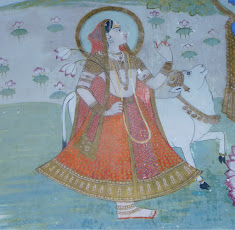
  CONNECTING THE DOTS: A CASE OF BANDHANI   Name of the article - Connecting the Dots: A case of Bandhani Name of Place - Jaisalmer Fort, Jaisalmer, and Mehrangarh Fort, Jodhpur Article written by - Ms. Radhika Malhotra Edited by - Mrs. Srishti  Safaya   The walls of various forts, havelis, and other buildings across Rajasthan are ornamented with paintings based on a myriad of themes which range from religious portraits to everyday life scenes to extravagant lives of royalties and the portraits of British officials. In few of the paintings found on the walls of Jaisalmer Fort, it can be noticed that the portraits of Goddess Radha, Goddess Parvati and of a lady painted on the walls of the Mehrangarh Fort, Jodhpur, are bound by a common factor which are the clothes of the subjects embellished with the tie-dye technique called bandhani. Bandhani is a type of patterned fabric that is crafted with expertise steeped in age-old traditions and knowledge sy...
THE STORY OF GAJENDRA MOKSHA

Image
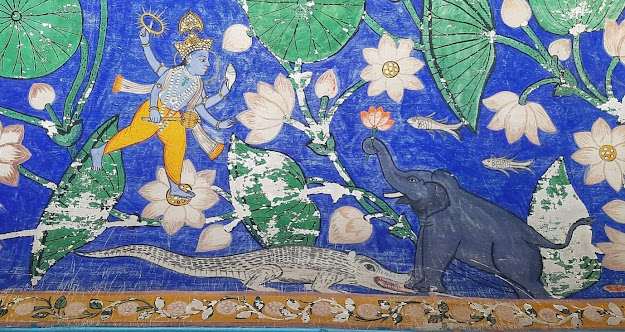
Name of story: The Story of Gajendra Moksha  Name of place: Shree Raghunath Temple, Bhindar, Udaipur Article written by: Laxmi Kanta Saini Edited by: Shreeya Rawat   सोsन्तस्सरस्युरुबलेन गृहीत आर्त्तो दृष्ट्वा गरुत्मति हरि ख उपात्तचक्रम। उत्क्षिप्य साम्बुजकरं गिरमाह कृच्छा – न्नारायण्खिलगुरो भगवान नम्स्ते॥३२॥ The story of Gajendra Moksha or the liberation of Gajendra is a puranic legend from the eighth  skandha of Bhagwata Purana , one of the most sacred books in Hinduism. The episode of Gajendra Moksha holds a significant place in Vaishnavism and has great symbolic value for Vishnu devotees. The theme based on mythological stories of Vishnu is mostly found in the temples of Vaishnava communities. The story is depicted very vividly on the walls of Shree Raghunath Temple in Bhindar tehsil of Udaipur, Rajasthan. The story is depicted in bright colours on the ceiling of the temple, with a predominant use of blue in the background representing the water. Delicate o...

PAINTINGS OF VIRUPAKSHA TEMPLE

Image
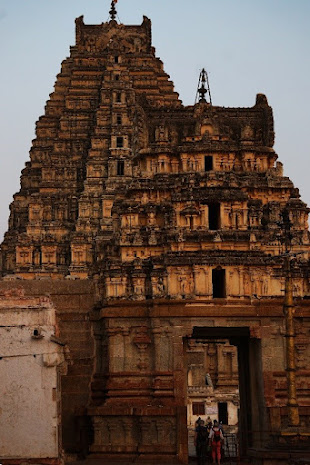
Site name: Virupaksha Temple, Bellari, Karnataka Article written by:  Shreeya Rawat   PAINTINGS OF VIRUPAKSHA TEMPLE The Virupaksha Temple or the Lokeshwara Temple dedicated to Lord Shiva is situated at Hampi in the Bellari district of Karnataka. ‘ Virupa ’ means ‘no form’, and ‘ aksha ’ means ‘eyes’, hence Virupaksha, a name for Lord Shiva, literally means eyes without any form. The temple is built in the Dravidian style of architecture and is located along the southern bank of the Tungabhadra River. The temple is a part of the Group of Monuments at Hampi, designated as a UNESCO World Heritage Site. Lakkan Dandesha, a Nayaka chieftain under the rule of Deva Raya II of the Vijayanagara Empire built this temple in the 7th century C.E. Later additions were made to the temple structure during the late Chalukyan and Hoysala periods. It is one of the oldest living temples in Hampi. The ceiling of the ranga mandapa of the temple houses wall paintings made in tempera technique....

KALI - THE FIERCE WARRIOR

Image
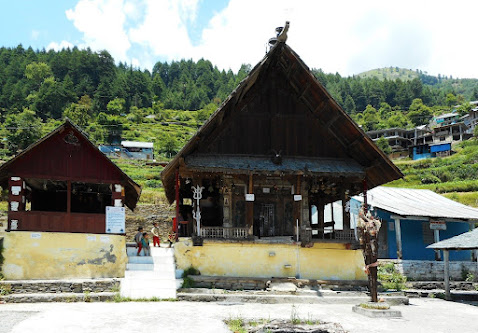
  Site name: Devi Kothi Temple, Chamba, Himachal Pradesh Article written by: Shreeya Rawat KALI – THE FIERCE WARRIOR The temple of Devi Kothi, dedicated to Goddess Chamunda, is situated in the Chamba district of Himachal Pradesh. It was constructed in 1754 C.E. by Raja Umed Singh, a strong believer in the Shakti cult. The wooden temple comprises architectural features such as a pent roof, an inner cella or the garbhagriha along with the pradakshina path. The outer walls of the garbhagriha (sanctum sanctorum) are painted with some interesting murals in tempera technique, wherein the pigments are mixed with a binding medium and used on a dry plaster. The temple is embellished with woodcarvings on the wooden ceilings and pillars, which has an influence of Mughal elements. The paintings of this temple belong to Chamba (Pahari) School of painting which is based on Rajput style having a Mughal influence. Artist Laharu, one of the famous painters of Chamba was commissioned to work o...

THE FAMOUS RAJASTHANI LEGEND OF DHOLA-MARU

Image
  Site name:   Shree Ganga Mata Mandir, Nagaur, Rajasthan Article written by:  Laxmi Kanta Saini Edited by: Shreeya Rawat   THE FAMOUS RAJASTHANI LEGEND OF DHOLA-MARU   Shree Ganga Mata Mandir is situated in the Nawa Tehsil of Nagaur District in Rajasthan. The temple is made upon an elevated platform with a raised staircase which leads to the main entry gate of the temple. The temple is approached through a recessed multi-cusped arched gateway with gokhas (arched sit-outs) on both the sides. There are three multi-cusped arched bays in the front and two bays on either side of the gokhas. The cornice of the gateway is supported by multiple carved brackets. The jagamohan (worship hall) of the temple comprises tibaris on both the sides which are festooned with paintings. The temple has a courtyard and a garbhagriha in which the idol of Shree Ganga Mata is installed. One of the tibari of the worship hall illustrates the famous Rajasthani folk love story of ‘...
Image
  Juna Mahal, Dungarpur Article by Ms. Neha Ajmera Edited by Garima Tomar The WPD survey teams have documented wall paintings in vast areas of Rajasthan and have come across many interesting sites in the state. One such site is Juna Mahal in the Dungarpur district. Dungarpur with its mesmerizing desert landscape has many palaces, innumerable temples,   havelis are the reminders of its colorful past and instill the essence of Royal Rajasthan. Dungarpur's past echoes through the remnants of its marvelous heritage which includes the rule by Guhilot and Mewar dynasties followed by Mughals, Marathas and the British. Nowadays, this lively and vibrant town is studded with strikingly distinct architecture that include architectural marvels such as Dev Somnath temple, Katkeshwar temple, Shrinath Ji temple, Shri Jetholeshwar Mahadev, Udai Bilas Palace and Juna Mahal. Among these timeless edifices in the area, Juna Mahal s...